

A healing water known since the Celts
Incorporated at 10% in the heart of our fragrances, this precious water is known for its beneficial properties.
Harmonizing and energizing water
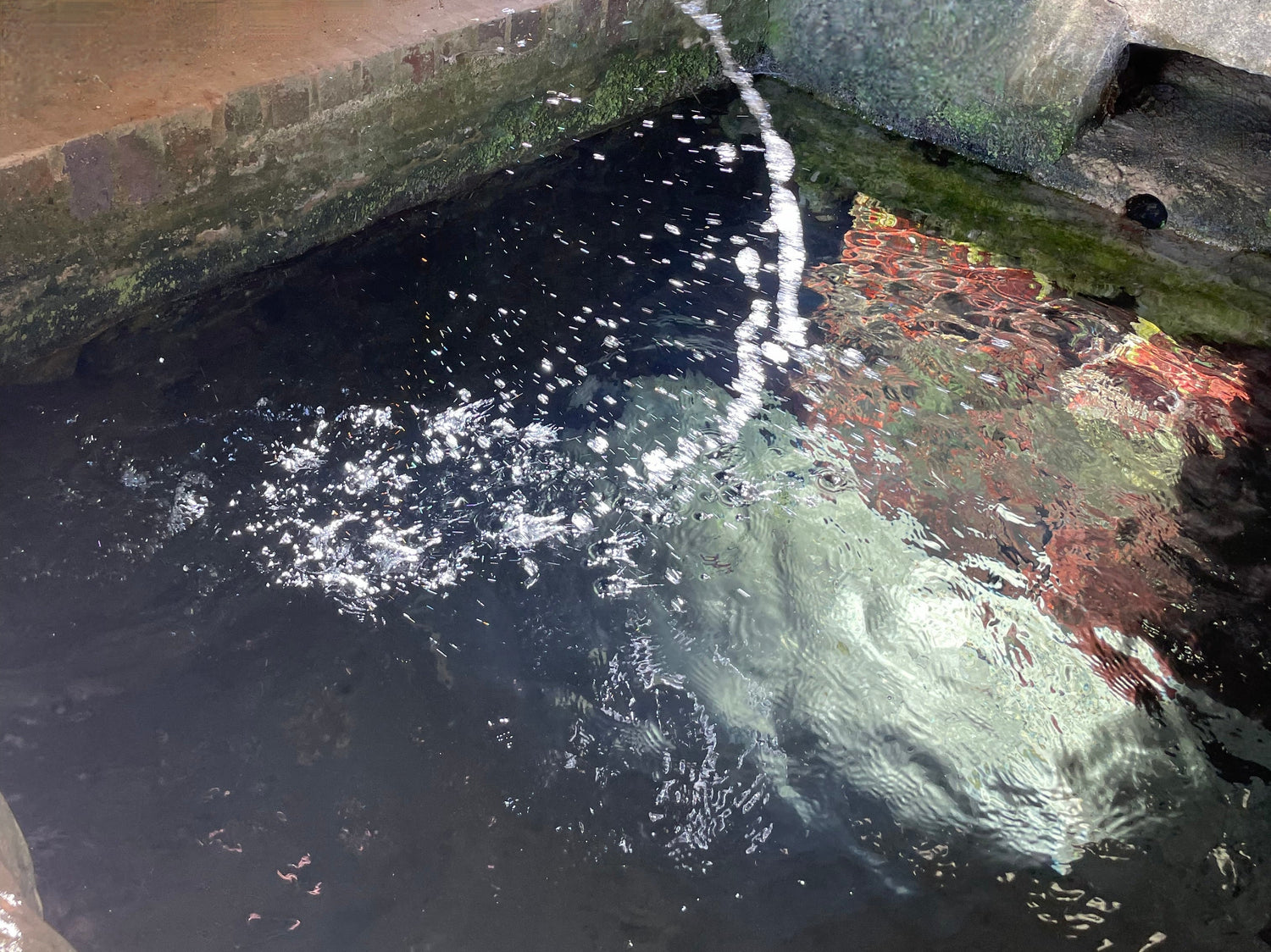
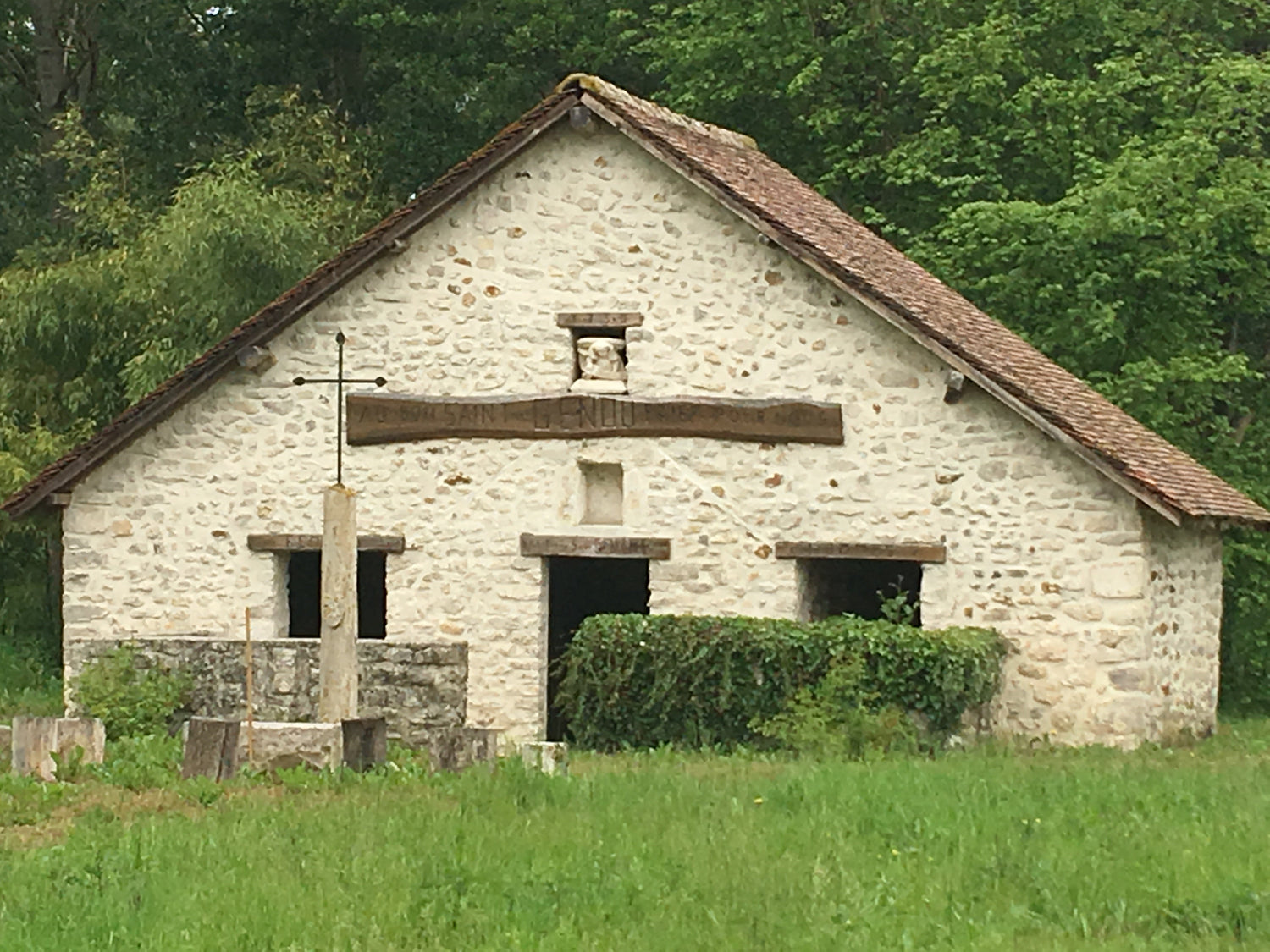
Once upon a time, in the heart of the hamlet of Breuzy located in the commune of Montcresson in the Loiret, there was a wonderful spring.
Aimée's spring, also known as the Saint Genulphe fountain, has been renowned since Celtic times for its healing properties. This unique site was a very active Benedictine priory in the 11th century, complete with a flour mill. This spring was Christianized by Saint Genulphe, bishop of Cahors in the 5th century.
It later became, in the 19th and 20th centuries, a major pilgrimage site for thousands of men and women who came to bathe there at the summer solstice on Saint John's Day.
I decided to incorporate this harmonizing water into perfume bottles, so that all men and women can benefit from its healing vibration.
Vibrant water
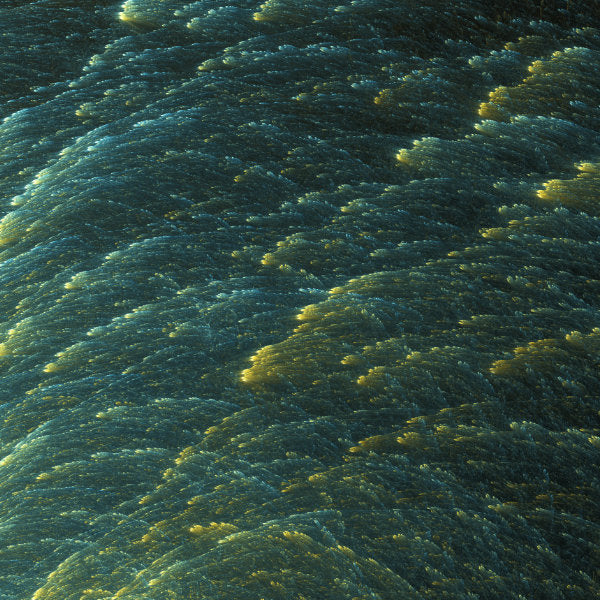
Powerful, the measurement of the vibrational rate of the water of Saint Genulphe with a pendulum shows a clear difference with 150,000 UB against only 10,000 UB for tap water.
Sensitive crystallization
According to Rudolf Steiner, nature incorporates "forces" that give it a shaping power. The presence of these "forces" is expressed by the ability of substances to organize the crystallization of copper chloride from a solution. This method is widely used by biodynamic winemakers to assess wine quality.
In cosmetics, the first to test their magnificent beehive-derived products using this method were Ballot Flurin.
For perfumes, Paysan Parfumeur was the first to test its perfumes and measure their quality using this method.
For our part, we thought it would be interesting to measure the life forces of our spring water and compare it to tap water.
Sensitive crystallization is a simple crystallization; under the effect of heat, the mixture evaporates, and once in contact with the surface, the molecules will condense and form crystals.
It is these crystal formations, specific to each product, that we will subsequently analyze.
-

Saint Genulphe spring water
-

Tap water


These two types of water can be distinguished based on three elements:
– The crystallogram of Saint Genulphe water shows a very visible median field (outer blue circle), whereas the median field of tap water is more diffuse and less regular. This shows that Saint Genulphe water has a better organizing capacity, thus allowing it to amplify and to stimulate the absorbing power of substances.
– The vacuoles, the centers of the crystallization edges, are another important point in the analysis of crystallograms. The vacuoles of Saint-Étienne water Genulphe cells are rounder and more symmetrical compared to tap water, which has open, deformed, and asymmetrical vacuoles.
– The final element of analysis is the texture of the crystallogram. Saint Genulphe water exhibits a good balance between structure and texture; its texture is more homogeneous than that of tap water. The latter has a poor and less dense structure.
These three elements clearly demonstrate that the spring water of Saint Genulphe is more structured, rich, and harmonious.